
New Tenants at 4th & Barelas!
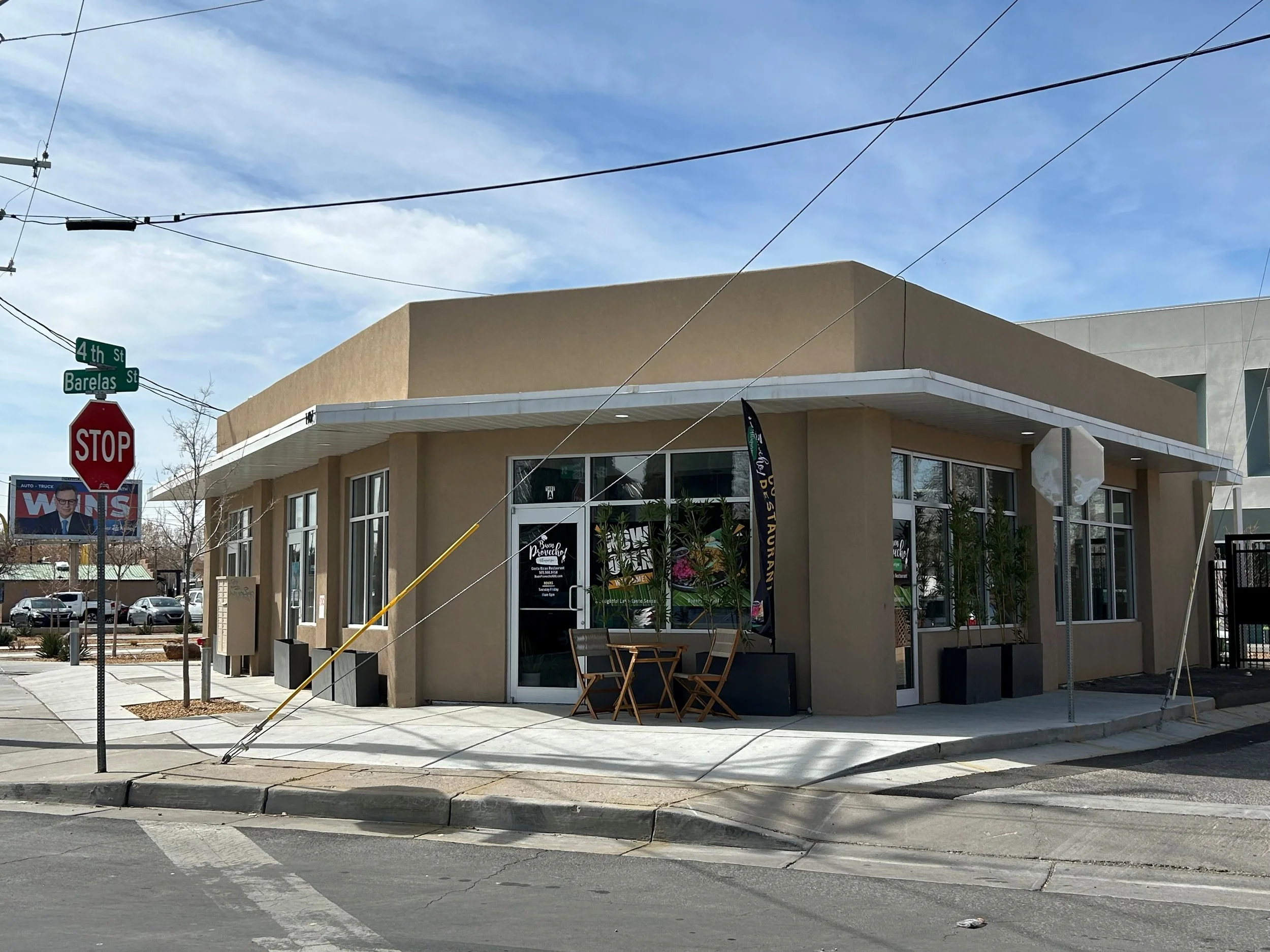
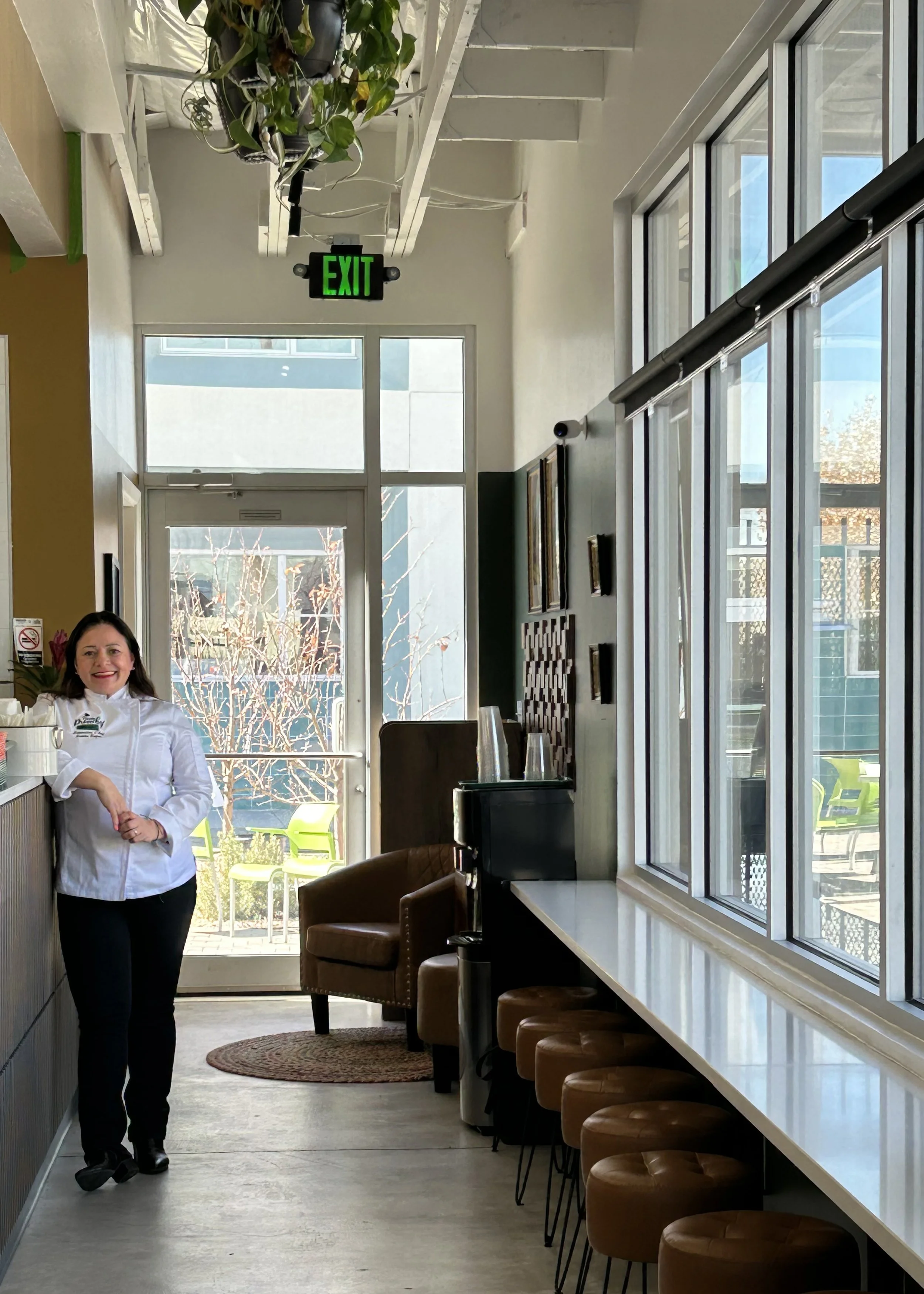
The storefronts located in the 1407 building at 4th & Barelas are all now officially leased! We are excited to welcome Costa Rican restaurant, Buen Provecho, vegan and gluten free cakery, Planty Sweet, and soon to be market concept by the Street Food Institute! We had the opportunity to sit down with each business owner to learn about their inspiration and their hopes for serving the Barelas community.
Q: How do you hope your business will serve or connect with the Barelas community?
A: We are here because I was one of the first graduates of the Street Food Institute's program 10 years ago. They always tell their students: if you have a dream and you work hard, you can do it.
I want to serve the community not just providing food for our customers, but sharing my humble experience as well.
Q: What can customers expect when they walk through your doors? Is there anything unique, special, or culturally meaningful?
A: Everything is very unique and cultural. Our menu is a collection of my favorite foods from growing up in Costa Rica. If someone tries something here and then travels to Costa Rica, they're going find the same dishes, maybe presented differently because here they have my personal touch. We play Latin music and we like color― especially green which represents our banana leaves. All our dishes are served on banana leaves and our tamales are very unique, wrapped in banana leaves as well.
It’s meant to be a happy experience. The minute that you walk in, you're going to feel welcome, because that's our character. That's our Pura Vida, a way to live life, and sharing it with people.
It’s traditional Costa Rican food with a happy ambience, lots of live plants, and you'll hear us speaking Spanish because it’s our first language, and many of the names of our dishes are in Spanish. We want to keep them that way because that’s who we are and what we represent.
Q: What are your hopes or plans for the future at this location?
A: Right now, we're open Tuesday thru Friday, just for lunch and coffee time in the afternoon, which is very traditional in Costa Rica. Normally from 2-5, we have coffee time with pastries and good coffee.
We serve just Costa Rican coffee here made using chorreadores, which is a unique, way to drink coffee in Costa Rica. But by the summer, we hope to be open on the weekends, and have outside dining. I know that New Mexicans love to eat outdoors, and it’s something I want to provide for them as well. I would love to offer dinner on Friday and Saturday nights. We've just been open here for a week. If people want us to be open on the weekends, we will be here on the weekends and offer dinner as well.
I feel very honored to be here, and to be part of this community. I hope that people will come to try our food.
Buen Provecho is located in Unit A and is open Tuesday-Friday 11am-5pm
Kattia from Buen Provecho
Q: Tell us briefly about your business. What do you offer, and what inspired you to start it?
A: Our business is Buen Provecho, a traditional and authentic Costa Rican and Latin food restaurant. My whole inspiration comes from my Costa Rican roots. Our food is very unique and different, and when I moved to this country, what I missed the most was the food. I thought to myself, if I'm missing it so much, maybe other people will enjoy it too. I wanted to offer something different to the community ― that would not just satisfy your hunger, but also your soul.
Q: Why did you choose to locate your business at Fourth & Barelas? And what drew you to the Barelas neighborhood specifically?
A: Barelas, like El Vado where I started, is a very beautiful location because of the story it represents to the community. Because I started at El Vado, I don't like “normal” places ― they have to be charming, have character, and feel different. That’s how I see Barelas.
I've wanted to open a second location for so long. We’ve looked at other places, but for one reason or another it never happened. When the opportunity came to be part of this project, it just felt right.
I love that Barelas is a neighborhood with a long history, around for hundreds of years. It’s also a close community that likes to support local businesses. I know my food is different. It may feel very modern the way we serve it, but I think people here will appreciate that. I hope that people will receive it with open arms so we can offer a unique flavor and experience.
Q: How do you hope your business will serve or connect with the Barelas community?
A: I definitely thought a lot about this when we first talked about locating here. I did feel self-conscious at first; a vegan and gluten free cake shop can feel out of place, and I didn't want to be a gentrifier. That was really important to me.
But I do this because I want everyone to be able to enjoy my treats whether or not you have dairy, egg or nut allergies. I can bake around the top five allergens and it's always nice to hear people tell me, “I haven't had a treat since I was diagnosed with this allergy.” I just want everyone to have access to it, including this neighborhood. Even if you don’t have allergies, you can still enjoy it.
I also try to keep costs low and keep my prices accessible. When I eat out at a restaurant as a vegan, I always feel like I'm being punished. Like for example, I have to pay extra for nut milk. I don't want people to feel that way here.
Q: What can customers expect when they patronize your business? Is there anything unique, special, or culturally meaningful you'd like people to know?
A: I grew up in Hong Kong which is a big, westernized city, and there's so many pastry shops that line the streets and everything is so beautiful. As a kid, I loved cakes, and loved walking by bakery windows because they were so pretty.
Aesthetic has always been my thing. And of course, taste is important, but how I stand out is that I try to go the extra mile to make it look pretty so that it feels like an experience. It’s not just a muffin or a cookie and it's not just something to satisfy a sweet tooth. At the culinary school, we learned how to make flavors stronger, to compensate for what vegan baked goods sometimes lack in traditional flavors or textures, and we make up for it with other flavors and textures. I always try to incorporate fresh florals, locally grown whenever they’re in season and that makes people really happy. When they’re in season, I grow my own edible flowers, and I make the presentation extra pretty.
Culturally, I like incorporating Asian flavors. At first it was daunting, but then I started making these mooncakes for Autumn Festival when I was vending at the Rail Yards Market. Autumn Festival is a Chinese celebration that takes place in September and celebrates the autumn harvest. People didn't know what mooncakes were, but they were well received. After that, I started doing more Asian flavors here and there like taro root, red bean, and matcha. Then a couple of years ago, I started doing Lunar New Year treat boxes and I realized there's so many Chinese and Asian families in Albuquerque. Nobody else makes them here so I gained some new customers, and they were super excited about them.
Q: What are your hopes or plans for the future here at this location?
A: Right now, I’m starting slow. I used to have a small team, and eventually I’d love to build staff again. I’m hoping to open for regular weekend walk-ins — maybe Saturdays, for bundt cakes and fresh treats — and continue offering pop-ups for special occasions. Another goal is to collaborate with the Street Food Institute. We talked about offering classes. I’d like to connect with the community and offer classes, especially on how to make plant-based desserts and other vegan food. I feel like vegan food is something growing in popularity, but it probably doesn't feel accessible, or it feels daunting to switch or substitute, but you don’t necessarily have to substitute. Sometimes you can make something different, something new, something original that embraces plant-based ingredients.
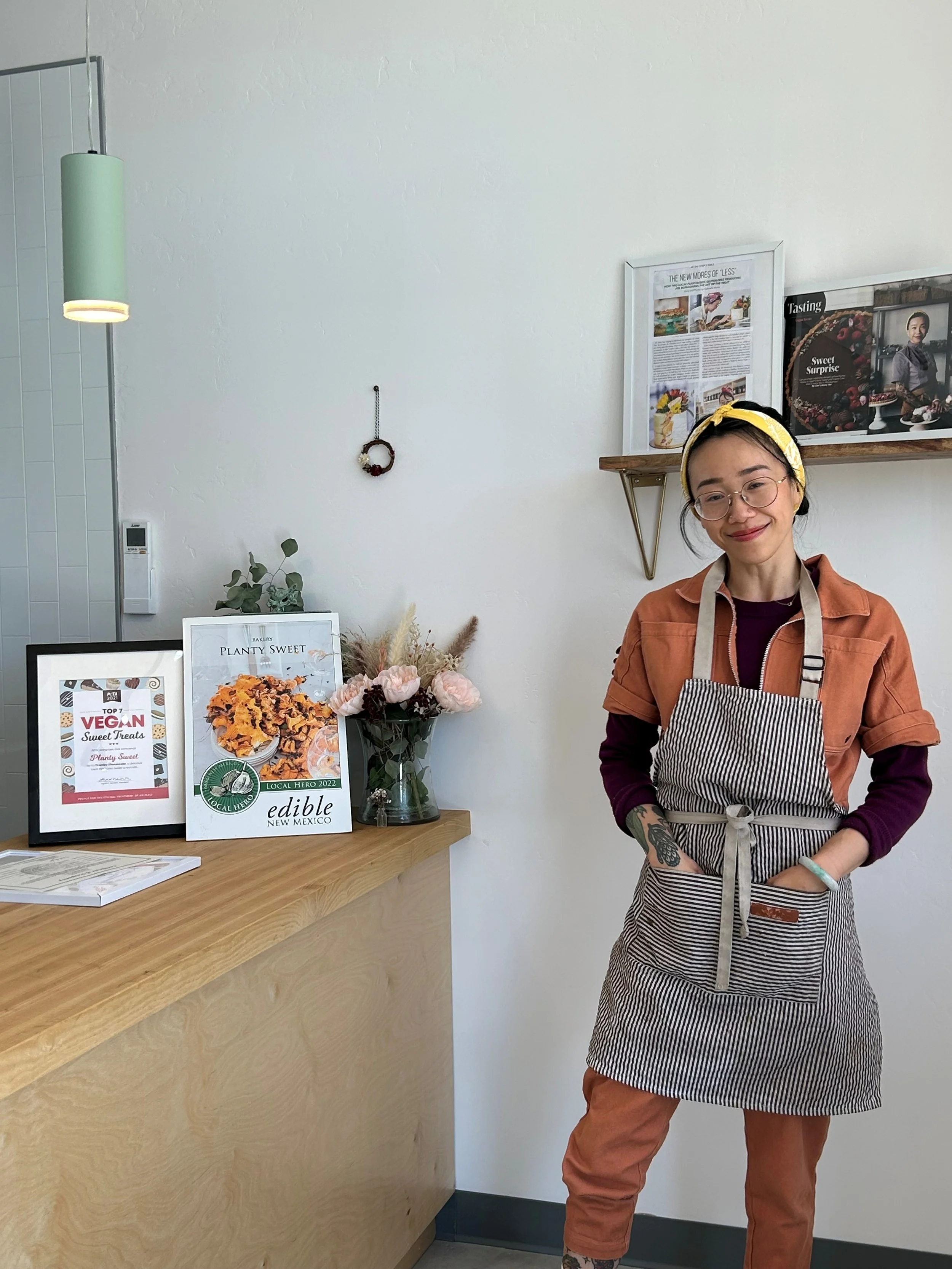
Planty Sweet is located in Unit C and at the moment is not open to the public, but you can order treats from them on their website or by emailing Karina at plantysweet@gmail.com.
Karina from Planty Sweet
Q: Tell us about your business. What do you offer and what inspired you to start it?
A: Planty Sweet is a vegan and gluten-free cakery. I became a vegetarian when I was 18, and in my late 20s, I attended a plant-based culinary school in Los Angeles. After culinary school, I moved to Albuquerque. At the time, I was teaching at the culinary school online and commuting back to L.A. as a flight attendant — it was crazy! Eventually, I quit my flight attendant job to fully pursue a culinary career.
There weren’t any vegan bakeries in town so I thought I'd start my own. I learned so much from culinary school. There's so much creativity you can have with plant-based ingredients and new techniques, so it was really fun to break away from traditional baking and do plant-based desserts. Then I decided to start my own vegan bakery, but my partner and his family have celiac disease, so it became important to me to make everything gluten-free as well.
Q: Why did you choose to locate here at 4th and Barelas, and what drew you to the Barelas neighborhood?
A: It feels super cool to be part of this space―next to SFI and surrounded by strong women-led businesses. When I first connected with Tina from the Street Food Institute, she introduced me to Homewise and this community space. Planty Sweet basically started in Barelas because I started out as a vendor at the Rail Yards Market.
The market introduced me to this community of local growers, artisans, vendors, and small business owners. Everyone was so kind and supportive. Being there was the first time I truly felt like I was part of a community. I'm originally from Hong Kong, and then I moved to LA, so I grew up in big cities, and they never felt like home to me until I moved to Albuquerque and started my business. It's so much more tight-knit and the culture― people really protect their traditions and their neighborhoods. I wanted to be part of that. Yeah, so I like being part of the Barelas neighborhood, planting roots where I started out.
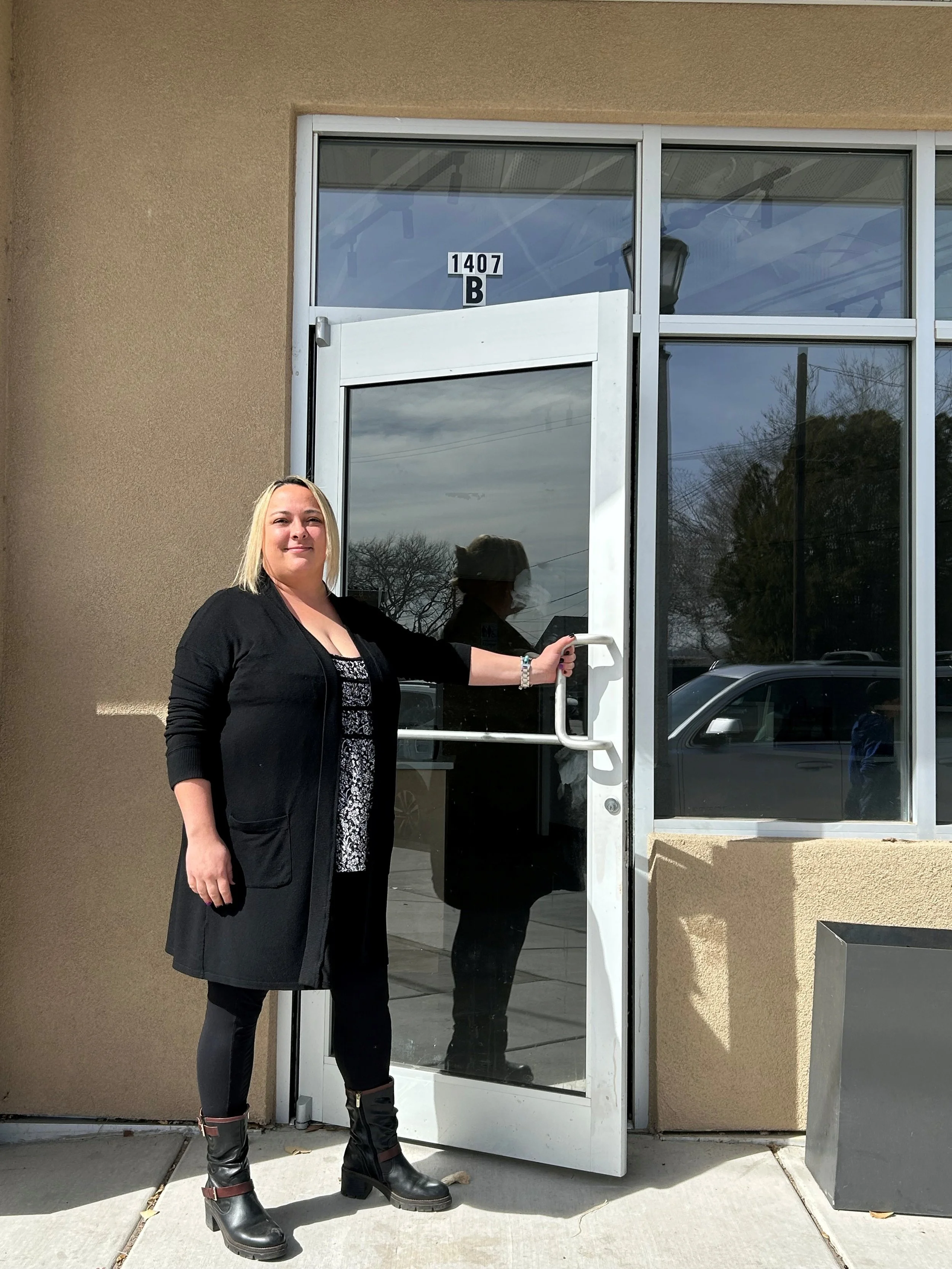
Emily at Street Food Institute
Q: What inspired SFI to open a market?
A: Our original vision for the retail space was to create a lunch and dinner micro-restaurant where entrepreneurs from our program could test their concepts in a low-risk environment. However, after receiving results from the 2024 Voice of Barelas Survey conducted by Homewise, we quickly learned that access to affordable groceries was a far more urgent need especially following the closure of the Stadium Supermarket and with Silver Street Market being the only nearby option, often at higher prices.
In response, we developed a concept that thoughtfully blends both ideas. The market will serve three key functions: first, it will provide staple grocery items and accept SNAP/EBT to help ensure food is accessible to all. Second, it will offer fresh, hot grab-and-go meals, expanding convenient dining options into the evening. Third, the bodega will feature products created by entrepreneurs working in our shared kitchen, giving small food businesses a platform to reach the community.
Together, these efforts address critical neighborhood needs by improving access to healthy groceries, increasing the availability of fresh prepared foods, and helping to reactivate a corridor that was once a food hub.
Q: What is SFI’s vision for the market, and how is it different from other markets in Albuquerque?
A: SFI envisions the market as more than just a place to shop. We see it becoming a vibrant community gathering space. We imagine neighbors stopping in for a cup of coffee and a locally made pastry, then lingering in the plaza to connect with one another. The market is designed to foster belonging while creating an inviting environment that reflects the spirit of the Barelas neighborhood.
What truly sets this market apart is that its direction and offerings will be shaped directly by the community. Through
Q: What role do you hope the market will play in the neighborhood? For residents, local businesses, and emerging food makers?
A: We hope the market will serve as a cornerstone for connection, opportunity, and neighborhood vitality. For residents, it will be a reliable place to access affordable groceries, fresh prepared foods, and culturally relevant products, while also offering a welcoming space to gather with neighbors. By creating an environment that encourages people to linger, whether over coffee, a quick meal, or conversation, we aim to strengthen the sense of community that has long defined Barelas.
For local businesses, the market will help drive foot traffic to the area and contribute to the continued revitalization of the corridor. We see it as a collaborative partner in the neighborhood’s economic ecosystem, complementing nearby businesses and encouraging residents and visitors alike to spend time locally.
For emerging food makers, the market will provide a meaningful entry point into retail. Entrepreneurs will have the opportunity to sell products made in our shared kitchen directly to the community, test new ideas, build brand recognition, and generate revenue. All within a supportive, mission-driven environment. Ultimately, we hope the market becomes a place where community and entrepreneurship grow together, reinforcing Barelas as a neighborhood rooted in culture, creativity, and shared success.
Q: Looking ahead, what are your hopes for the future of the market?
A: We hope the market becomes a trusted community resource and a model for what neighborhood markets can be, rooted in accessibility, responsiveness, and local collaboration. Our vision is for the space to be welcoming to everyone, ensuring that all residents can access fresh food, staple groceries, and culturally relevant products without financial barriers. By partnering with local farmers and food entrepreneurs, we aim to keep prices as affordable as possible while strengthening the regional food economy.
We are also excited to implement a grocery delivery program in partnership with 4th & Barelas tenant Together for Brothers, providing bike delivery throughout the neighborhood. This initiative will help remove transportation barriers, expand food access, and further our commitment to meeting residents where they are.
Over time, we hope the market is recognized as more than a place to shop, but as an anchor for community life, supporting small businesses, creating opportunities for emerging food makers, and contributing to the long-term vitality of Barelas. Ultimately, our goal is to demonstrate that a neighborhood-centered, community-informed market can be both sustainable and deeply impactful, paving the way for similar models in other communities.
The unnamed Street Food Institute Market will be located in Unit B and is not yet open, but check out the Street Food Institute’s social media for updates!
At 4th & Barelas, our goal is to create space for local entrepreneurs to grow in a neighborhood that values authenticity and connection. We’re honored to support these small businesses and look forward to seeing this corner continue to flourish as a vibrant gathering place for Barelas and beyond. We hope you can stop by and support these small businesses too!